A Mirror, a Window, a Masterpiece
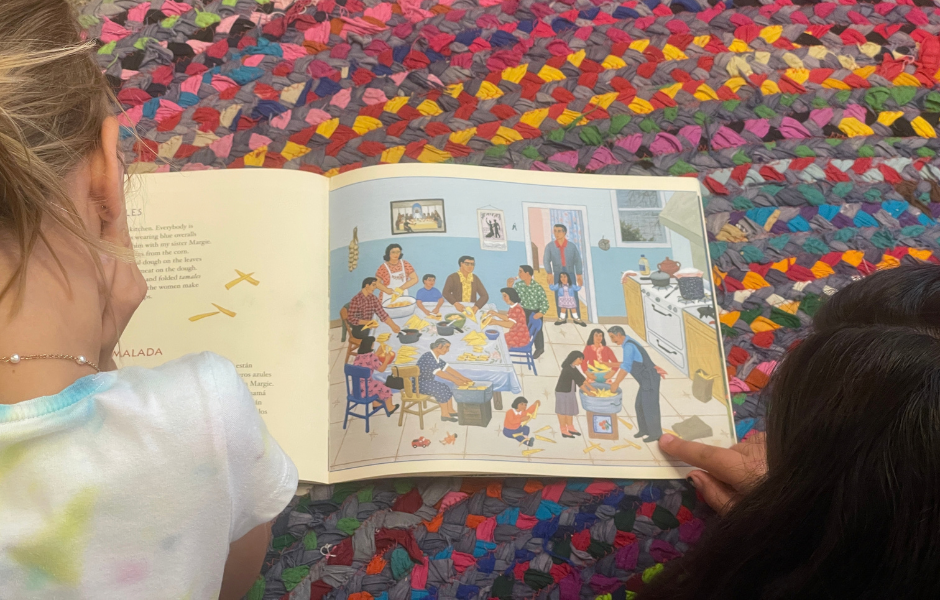
Two girls, one Latina, one not, looking at Tamalada by Carmen Lomas Garza, in her bilingual book Family Photos
Multiculturalism in art can be so much more than just checking the boxes of representation. In its best form, it offers both a mirror for people to see themselves in and a window for people to connect with lived experiences outside of their own.
The mirrors and windows framework was popularized by Dr. Rudine Sims Bishop, in her 1990 essay "Mirrors, Windows, and Sliding Glass Doors," building on a metaphor educator Emily Style had first used a few years earlier.
Bishop was writing about children’s books, but the idea is helpful for understanding all kinds of art. Each of us comes to a piece of art from a different place, with our own experiences and perspectives, so the same piece can be a mirror for one person and a window for another.

Viral photo of a little girl in awe of a portrait of former first lady Michelle Obama painted by Amy Sherald; more about this photo by Ben Hines here
Mirrors
A book or any kind of art can be a mirror when it reflects something true about the viewer back to themselves. It starts with representation, seeing people who look like you, speak your language, share your traditions, or recognizing the textures or landscapes of your own life, but it goes much deeper than demographics. Art that is a mirror makes a space feel like home. It’s affirming. It says: You are seen. Your story matters. You belong here.
Windows
Art becomes a window when it offers a view into a life different from your own. Part of the joy is the adventure: new landscapes, new traditions, new ways of telling a story.
But the best kind of window is the kind that asks something of you. Experiencing art like this is a practice of empathy. It’s the chance to see things from someone else’s perspective, to imagine how they move through the world. You might even notice some things that feel familiar, even universal, like joy or grief, or the longing for home. You’ll definitely notice what’s different and the differences are a gift. And both are opportunities for connection.
Good art windows make the world bigger and smaller at the same time.
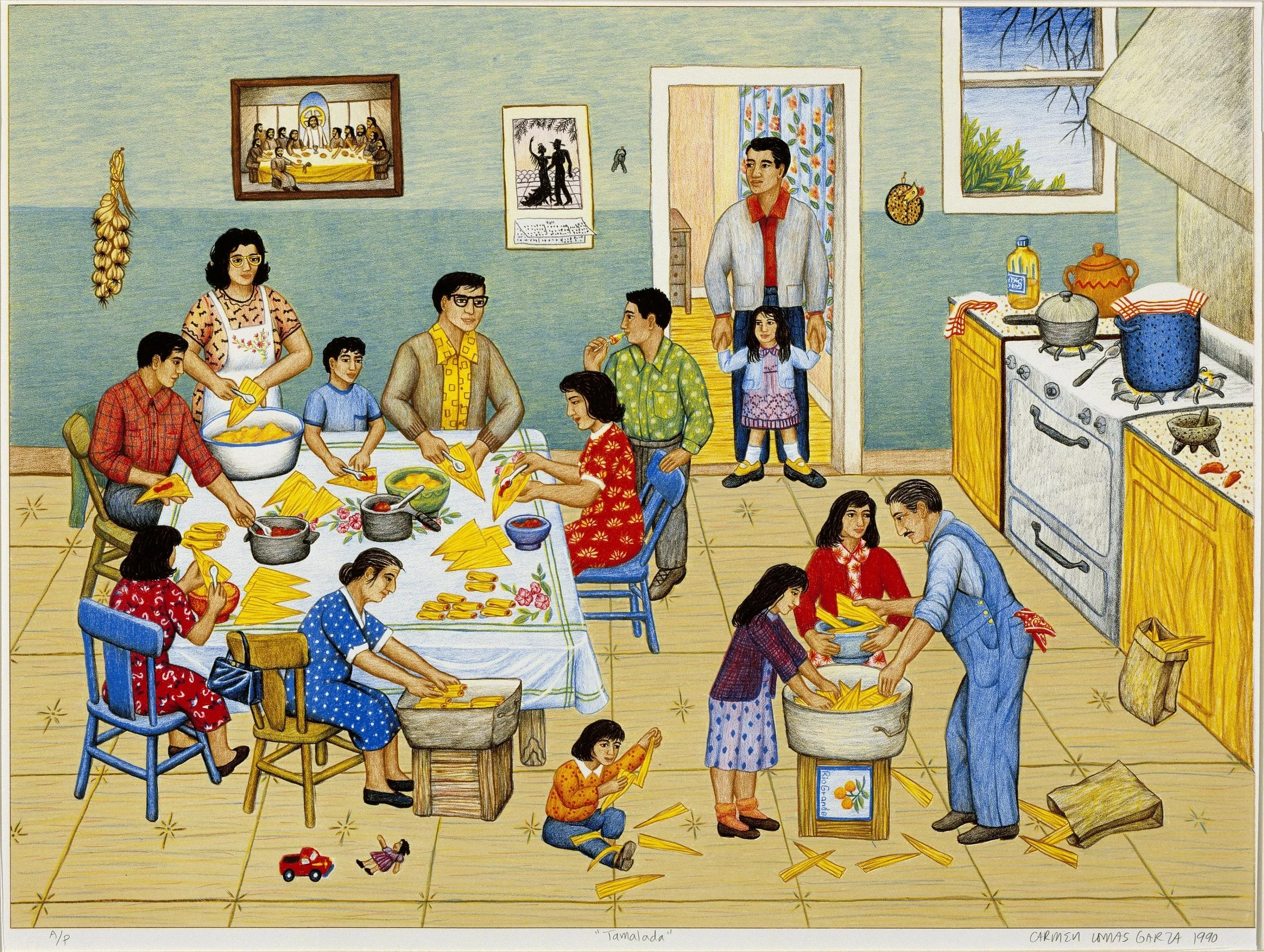
Tamalada by Carmen Lomas Garza, a Chicana artist known for her everyday images of family life in Texas and California. You can learn more about Lomas Garza and her art here.
Bringing it home
Multicultural art will always be both a window and mirror, to different people, but sometimes even for the same person. Some of us will see ourselves; some of us will see someone new; most of us will see a little of both. It’s about sharing the view and the space between us getting a little bit smaller.
That’s the idea behind the work that Corazón, the Healthcare Foundation Northern Sonoma County and the City of Healdsburg are doing together to make Healdsburg’s Abel de Luna Community Center more welcoming and a true multicultural center.
Part of that work is happening on the walls of the community center right now. The center's new paint colors were chosen by the community and are much more colorful than the standard municipal beige we’ve come to expect from public buildings. And two new murals will soon welcome us all at the community center. Each was developed by a local artist in partnership with a diverse Design Advisory Committee.
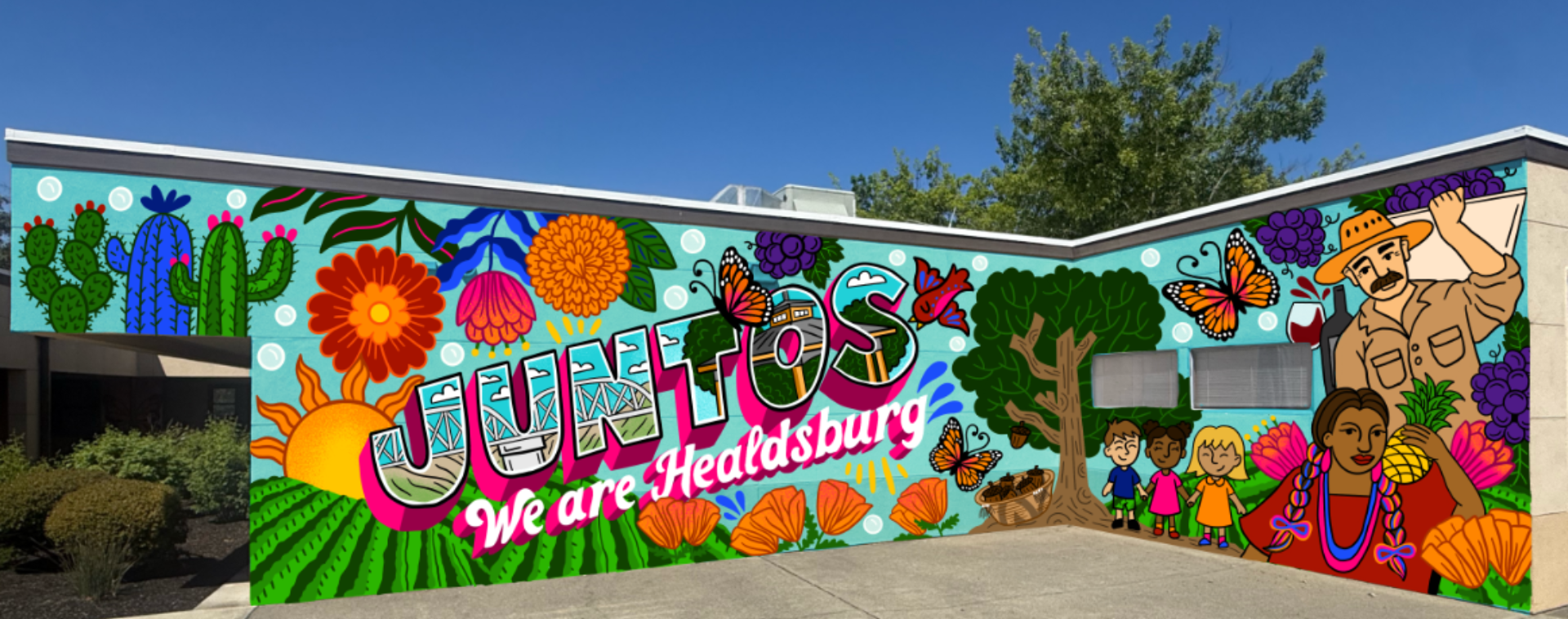
Rendering of Juntos by Blanca Molina
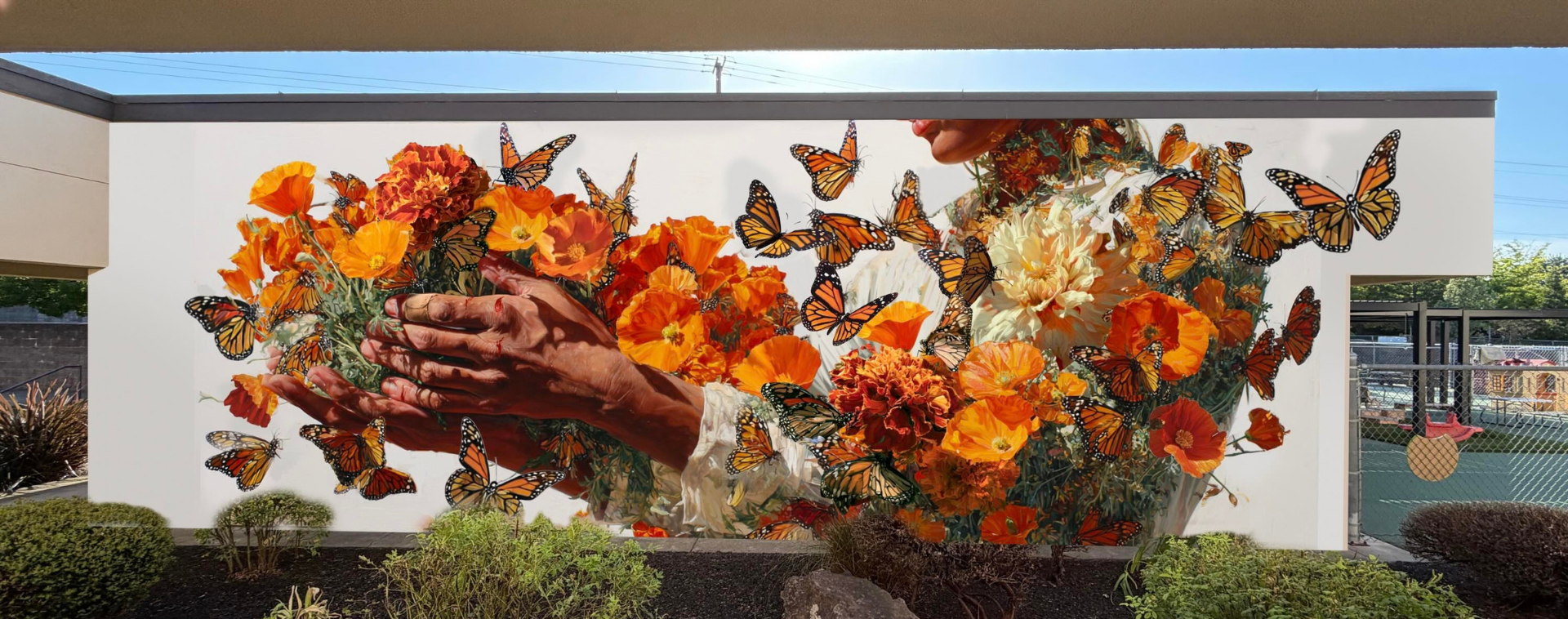
Rendering of Jake Messing’s mural Levedad/Levity
Both murals will be painted with support from the community in the coming weeks. No experience required, just a willingness to be a part of something bigger. Stay tuned for more information!
Years from now, when you walk into the community center, you’ll see your brushstrokes on the wall, right next to your neighbors’. You’ll see a community that came together to make something beautiful for all of us. A mirror, a window and a uniquely Healdsburg masterpiece, all in one.
